SPECIAL SESSION #10
Farmer-Centric Sensing Infrastructures and AI for Interoperable Digital Agrifood Commons
ORGANIZED BY
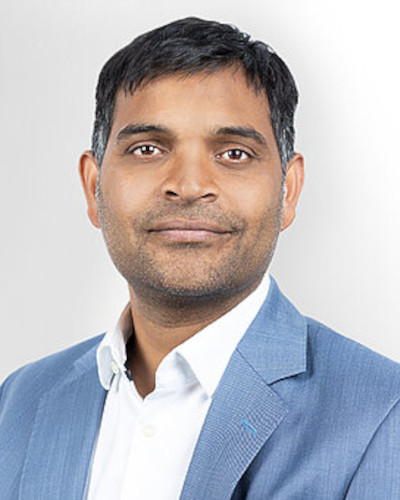 Raghu Chaliganti
Raghu Chaliganti
Digital Agriculture Fraunhofer Heinrich Hertz Institute, Germany
 Sebastian Bosse
Sebastian Bosse
Digital Agriculture Fraunhofer Heinrich Hertz Institute, Germany
SPECIAL SESSION DESCRIPTION
Agriculture is undergoing a rapid digital transformation driven by advances in sensing technologies, satellite remote sensing, Internet of Things (IoT) devices, robotics, and artificial intelligence. These technologies enable continuous measurement of soil conditions, crop development, environmental variables, and agroclimatic parameters, generating data streams that support precision agriculture, climate risk assessment, and data-driven farm management.
Modern agricultural and forestry systems increasingly depend on integrated measurement infrastructures combining in field sensors, remote sensing platforms, environmental monitoring systems, and AI based analytics. However, the heterogeneity of sensing devices, data formats, calibration practices, and proprietary platforms poses fundamental challenges for measurement quality, traceability, and the scalable integration of sensor systems across diverse agricultural contexts. Ensuring measurement reliability and comparability across multi source sensing pipelines, from soil probes and weather stations to UAV mounted and satellite based instruments, remains a critical open problem, particularly when AI driven analytics depend on consistent and well characterized input data.
Addressing these challenges requires interoperable digital infrastructures built on principles of modularity, openness, and discrimination-free access, enabling seamless integration of sensor networks, agroclimatic monitoring systems, soil and crop sensing technologies, and AI-driven analytics. Critically, such infrastructures must be designed with the needs of farmers and land managers at their centre, ensuring that measurement-derived insights are accessible, actionable, and relevant at the farm level. The concept of the Digital Agrifood Commons provides a promising framework for such farmer-centric infrastructures by enabling shared digital platforms that ensure data sovereignty, openness, and trustworthy data exchange across agricultural ecosystems.
The development of these infrastructures increasingly relies on globally harmonised standards and reference architectures that support modular integration and trusted interoperability across heterogeneous sensing systems and AI services. International standardization efforts such as ITU-T Study Group 20 – Question 11/20: Digital Agriculture: From Smart Farming to Safe and Secure Consumption are advancing reference architectures and interoperability frameworks for digital agriculture ecosystems.
Complementing these efforts, the FAO–IFAD–ITU–WFP Global Initiative on AI for Food Systems promotes responsible and trustworthy AI deployment across agrifood systems, emphasizing inclusive digital infrastructures, transparent data governance, and scalable AI-driven services.
This special session aims to bring together researchers working on sensor technologies, measurement systems, data integration, and artificial intelligence for agriculture and forestry, together with experts on interoperable digital infrastructures and standards-based architectures for agrifood systems. Particular emphasis will be placed on measurement quality, calibration, and traceability in multi-sensor agricultural environments, as well as on modular and open architectures that enable discrimination-free access to digital services while ensuring trustworthy and interoperable agricultural data ecosystems.
TOPICS
The special session welcomes contributions including but not limited to:
- Integration of IoT sensor networks and agricultural measurement systems;
- Calibration, measurement uncertainty, and traceability in multi-source agricultural sensing;
- Soil sensing technologies, soil health monitoring, and digital soil mapping;
- Crop monitoring, yield estimation, and remote sensing applications;
- Forest inventory, biomass estimation, and environmental sensing in forestry contexts;
- Agroclimatic monitoring and environmental sensing systems;
- Integration of UAV, satellite, and in-field sensor data;
- Data fusion from sensor networks, satellite imagery, and field observations;
- AI and machine learning for crop monitoring, pest detection, and decision support;
- Precision agriculture systems combining sensing technologies and AI;
- Interoperable architectures and digital infrastructures for agricultural sensing systems;
- Standards, reference architectures, and data governance frameworks for agrifood AI;
- Farmer-centric design of measurement-derived decision support services.
ABOUT THE ORGANIZERS
Dr. Raghu Chaliganti is a digital agriculture researcher and policy expert specializing in artificial intelligence, data governance, and sustainable agrifood systems. With over 15 years of international experience across Europe and South Asia, his work focuses on interoperable digital infrastructures, AI-enabled decision support systems, and farmer-centric approaches for climate-resilient agriculture.
He serves as Co-Rapporteur for ITU-T Study Group 20, Question 11/20 on Digital Agriculture, contributing to global standards on digital agriculture architectures, data interoperability, and trustworthy AI systems. He is also actively involved in international initiatives on AI for food systems.
Dr. Chaliganti is a Senior Researcher at Fraunhofer Heinrich Hertz Institute (HHI), Berlin, where he leads work on AI, IoT, and digital farm infrastructure, including coordination of the Indo-German ACRAT (Agroecological Test Hubs) initiative.
He holds a Dr. rer. agr. (PhD) in Agricultural Sciences from Humboldt University of Berlin, an M.Sc. in Tropical and International Agriculture from the Georg-August University of Göttingen, and a B.Sc. in Farm Science and Rural Development from Osmania University, Hyderabad.
Sebastian Bosse is head of the Interactive & Cognitive Systems group at Fraunhofer Heinrich Hertz Institute (HHI), Berlin, Germany. He studied electrical engineering and information technology at RWTH Aachen University, Germany, and Polytechnic University of Catalonia, Barcelona, Spain. Sebastian received the Dr.-Ing. degree in computer science (with highest distinction) from the Technical University Berlin in 2018.
During his studies he was a visiting researcher at Siemens Corporate Research, Princeton, USA. In 2014, Sebastian was a guest scientist in the Stanford Vision and Neuro-Development Lab (SVNDL) at Stanford University, USA.
After 10 years as a research engineer working in the Image & Video Compression group and later in the Machine Learning group, he founded the research group on Interactive & Cognitive Systems at Fraunhofer HHI in 2020 that he has headed since.
Sebastian is a lecturer at the German University in Cairo. He is on the board of the Video Quality Expert Group (VQEG) and on the advisory board of the Interational AIQT Foundation. Sebastian is an affiliate member of VISTA, York University, Toronto, and serves as an associate editor for the IEEE Transactions on Image Processing. Since 2021 he has been appointed a chair for the ITU focus group on Artificial Intelligence for Agriculture.
His current research interests include the modelling of perception and cognition, machine learning, computer vision, and human-machine interaction over a wide field of applications ranging from multimedia and augmented reality, through medicine to agriculture and industrial production.